Category: Anxiety

  • An Interview With Dr. Linda on Letting Go of Worry

    Christina Jonas Kennedy interviews Dr. Linda Mintle on her latest book, Letting Go of Worry. Here is an excerpt of that interview:

    Christina Jonas Kennedy: If people could only gain a few key ideas from reading your book, Letting Go of Worry, what ideas would you like them to be?
    Dr. Linda Mintle: I am like a lot of people. I thought worry was a part of my every day life and had to be managed. But worry is not something to be managed. It is a bad habit that needs to be stopped. We can be free of worry and do not need to keep worry as our life companion. It is also important to remember that letting go of worry is something we practice with our minds and work on daily. So rather than feel guilty when worry pops up, accept God’s grace, and intentionally cultivate a worry free life.  This is only possible because of our relationship with God. Without God, you should worry!

    Christina Jonas Kennedy: Was there a specific incidence that spurred you to write this book, or had it been an ongoing thought?

    Dr. Linda Mintle: I’ve wanted to write a book on this topic for years because it is personal for me. I’ve had experiences that I could use to justify worry—my mom had cancer twice, one of my brothers was hit on his motorcycle and almost killed, my other brother was killed from a terrorist bomb on an airplane and I struggled with infertility for seven years. These experiences create an awareness of feeling out control and are a set up for worry. Thus, worry became a natural default for my family. Yet, I knew God’s word and the instruction to be anxious about nothing.

    Christina Jonas Kennedy: Was the prime idea of Letting Go of Worry your first idea for your book, or did your thoughts transform during the duration of writing your book into something that you hadn’t foreseen at the beginning?

    Dr. Linda Mintle: That is an interesting question because I usually write a book thinking I know exactly what I want to say. But I was surprised by how definitive Jesus is about the subject of worry. There is no wiggle room in His words. In Luke 21:14 Jesus tells his disciples to make up their minds not to worry. He basically says don’t do it. Worry is evidence of doubt. I came to the conclusion that if I intentional allow worry in my life, I am sinning—a very difficult concept for me since worry comes easily. I know God’s grace is there to help and that He wouldn’t tell us to do something that is impossible to do. But I was personally challenged to make changes in my own life.

    For the rest of this interview, click here.
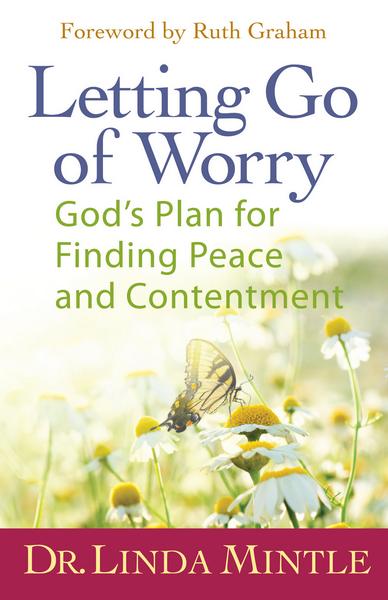
     

  • FREE Book Contest–LETTING GO OF WORRY

    Win Dr. Linda Mintle’s newest book that releases October 1, 2011 Letting Go of Worry

    Forward by Ruth Graham

    Here is all you do to win. Contest ends October 1, 2011

    You must have a United States mailing address to win

    1. Go to my public Facebook Page, Dr Linda Mintle, Author and Speaker

    2. Click LIKE

    3. Answer the question, “My greatest worry is….” and you will be entered to win.

    Five people will be randomly drawn as winners. It is that easy!

  • Recognizing a Panic Attack

    I stood at the top of the ski slope and looked down. There was no way I was going to get down the mountain. The slope of the vertical drop was frightening. I was convinced I would be seriously injured if I had to ski down that run. But I was stuck. I had to get down. Panic overwhelmed me. I started to feel terror, then dread. I couldn’t breathe. My heart was pounding and I felt like I was choking. Dizzy, I sat down on my skis.

    I knew I was starting to panic and had to get control of my thoughts and physical symptoms. Deep breathing techniques were familiar to me as I taught them to my patients. I prayed and shifted my thoughts to God. I visualized God accompanying me down the slope and getting me to the bottom safely. A plan was needed. There is always a way out, I told myself.

    Eventually, I did get off that mountain. By calming myself down after having a brief panic attack and problem solving, I reached the foot of the slope. My strategy was to move to the far side of the run where the snow was less packed down and more controllable. Then I would slide down on my bottom. Very slowly and gradually, I made progress down the hill.

    If you’ve ever experienced a panic attack, you feel like you are going to die, lose control or freak out.  Your thought is to get out of the situation. There is a sudden and intense fear that can last minutes or even hours. During that time, you experience at least four of 13 identified complaints:

    • Pounding heart
    • Sweating
    • Shaking
    • Shortness of breath
    • Feelings of choking
    • Chest pain
    • Nausea
    • Dizziness or fainting
    • Feeling detached from your body
    • Fear of losing control
    • Fear of dying
    • Numbness
    • Chills or hot flashes

    Panic attacks can be brought on by specific events or happen out of the blue. For example, large dogs can easily frighten small children. If a dog snaps at a child, this can frighten the child. The next time the child sees a large dog, he may anticipate something bad happening to him that he can’t control. This fear can lead to panic whenever the dog comes near the child.

    Some people are frightened by heights and begin to panic when atop a tall building. Others may have fears of flying or being in confined spaces. There are a number of situations that can bring on panic. At times you can identify the source immediately (e.g., the dog). Other times you feel panicked and don’t know why.

    If you find yourself experiencing the symptoms listed above on a regular basis, you may suffer from panic attacks. Don’t wait, Get help. Worrying about having these attacks and then having them is an unsettling way to live. There are treatments and spiritual helps that can reduce and stop these attacks. One of the major treatments is a type of therapy called Cognitive Behavioral Therapy along with relaxation. Panic can be overcome.