
Blog

  • 3 Spiritual Ways to Destress

    3 Spiritual Ways to Destress

    I will be the first to admit, it’s hard for me to quiet myself for any amount of time. Seems like I always have something to do and can’t sit still for too long. But our constant busyness is one reason we have too much stress. Recently, I blogged about physical ways to destress and help you relax. Now, let’s talk about a few more ways to take care of stress. Because we are body, mind and spirit, spiritual approaches help with stress as well. Spiritual practices help us slow down and focus our mind on things above.

    Mindfulness

    Let’s begin with mindfulness. In Christian mindfulness, you focus away from your anxious or stressful thoughts to the present moment. This requires a focused attention exercise— a way to stop all the noise in your head that is distracting you and making you feel stressed. To begin, just breathe! Notice your breathing as a way to change your focus. Then mediate on God, His presence and His care for you. Accept His grace and rest in His presence. You can also incorporate prayer. Prayer meditation has been the practice of the church for all time. Prayer calm us down when we are stressed and anxious. We see this in brain imaging studies. With prayer and meditation, we look to Jesus, the person of our meditation, and focus our mind on good things as instructed in Philippians 4:8.

    Music Meditation

    Music mediation is a stress reducer. I sang in the choir and we did a number of contemplative pieces of music like Mozart’s Ave Verum and the classical piece, O Nata Lux. Both are stunningly beautiful pieces of music. Each week as we practiced these pieces, I noticed how stress left me during those rehearsals. The therapeutic use of music affects the tiny muscles of the middle ear connected to the vagus nerve. You can train your ear to music and in the process help regulate your nervous system.This “tuning” is calming. So next time you are stressed, listen to a beautiful piece of music, absorb yourself in it and notice the distressing effect.

    Lectio Divina

    This is actually a practice I first learned when teaching at Wheaton College. Lectio Divina means “divine reading.” It was practiced by monks in the 6th century and is a beautiful way to read the Scriptures. Here is what you do: 1) Choose a passage of Scripture, e.g., Psalm 121. Read it through to simply get the feel of the passage. 2) Now read the passage again. This time, meditate on the passage, listening to the Holy Spirit and any word or phrase that stands out. 3) Read the passage a third time. This time, turn your meditation to prayer. Share your heart and draw near to the Lord. 4) Read the passage one last time in a contemplative way as you rest in God’s presence.

    When you need to destress and slow down from all the busyness, try any or all three of these methods to reduce your stress and calm your spirit. Not only will you relax, but these will strengthen your spiritual life as well.
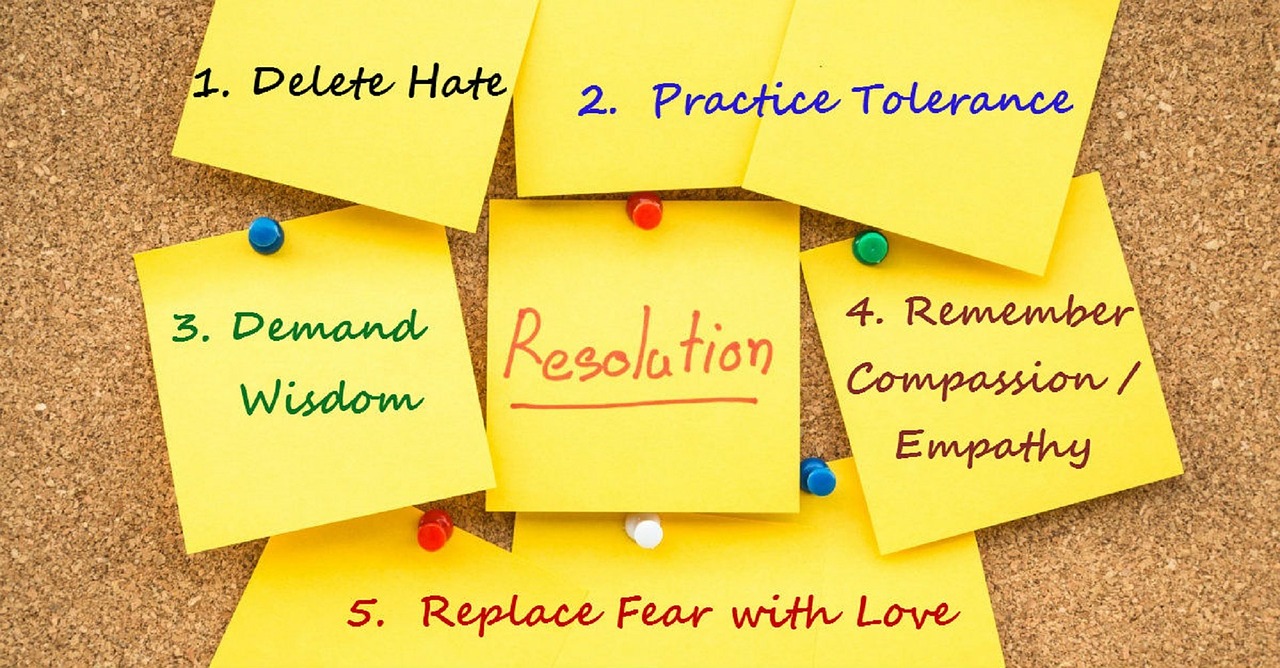

  • The Way to Stop Hate

    The Way to Stop Hate

    Hate is a strong emotion that we see expressed far too often. It is also a dark emotion that has no place in the heart of a Christian. You can dislike someone or not agree on major issues, but hate should not be embraced. Otherwise, it will become a cancer in your soul.

    Today we celebrate the legacy of Martin Luther King, Jr. who fought hate through love. Let’s honor his legacy by examining our heart and do everything we can to remove hate in our circles. Let’s call each other to love. To do so, ask yourself, is there hate for a person or a group that you secretly harbor?

    So many people express hate on social media, in the streets and through divisive behaviors, targeting anyone who is different. We are surrounded by haters. The impact of this vitriol on a community and personal relationships is significant. In fact, consider what hate does to the brain.

    Hate in the brain:

    When someone is in love, the parts of the brain involved in judgment and reason deactivate. This is why we often say that love makes someone “stupid.” They lose their good sense. By contrast, hate heightens your judgment. It activates regions in the brain associated with aggression. The motor parts of your brain move those aggressive feelings into action. This is why holding on to hate is dangerous. The more a person hates, the more prone he or she is to take action. Haters calculate their moves and plan revenge. Reason and rumination are both involved.

    Reasons we hate:

    There are many reasons why people find themselves in this negative state of emotion–they have been deeply hurt by someone, fear others who are different, or feel empty and target others as a way to deal with the void. Sometimes, we hate because others remind us of negative things about ourselves and we project those feelings on to others. Hate can also be bred by betrayal and by envy. It can become all-consuming and affect a person physically as well as spiritually and emotionally. In the end, hate leads to bitterness.

    Hate is learned:

    We learn to hate somewhere—whether the source is online, a family system, disturbed friends, violent video games—something began to build hate as a way to deal with others and/or ourselves. But hatred is a sin of the heart. For the Christian, it is understood to be as dangerous as an act of murder. We are directed to rid ourselves of this destructive emotion.

    The science of hate tells us that people who feel hate often beleive they can also be loving and kind. But hate is a cancer and brings only destruction. “Whoever hates his brother is in the darkness and walks in the darkness, and does not know where he is going, because the darkness has blinded his eyes” (1 John 2:11).

    Rid yourself of hate:

    There is no positive benefit or place for hate unless you direct that emotion toward evil. Psalm 97:10. “Let those who love the Lord hate evil.” The way to get out of that darkness is to walk in the light and allow God to transform your heart. Forgive those who have hurt you. Let go of bitterness and the need for revenge. Stop thinking and ruminating about personal injustices. Rather, ponder how can you be part of a solution and begin to open your heart to love.

    In today’s world, we need a healed land and healed hearts. Yet in my lifetime, we have moved completely away from national conversations that include the role of faith in a nation that was founded on faith in God. Instead, we only discuss secular solutions that fall short and are incapable of changing a hateful person’s heart.

    Only God changes hearts. Only God can take a terrorist like Saul and transform him to Paul who loved those he once hated. If we want to stop hate, we need God’s transforming power. And sadly, that’s not a message we hear anywhere in today’s analyses of our hate problem.

  • Reduce Stress: Be Assertive!

    Reduce Stress: Be Assertive!

    “I am so upset with my friend! I don’t want to be around her because she constantly puts me down.”

    “Have you talked to her about this?”

    “No, I am afraid to bring it up. She may not to talk to me anymore if I do.”

    Listening to this conversation, I had to wonder. What kind of friend would not speak to you when you try to address a problem? And why is this person afraid of her friend? Where is her self-confidence? She is stressed and anxious, but passive. If she wants to reduce her stress over this relationship, she needs to be assertive.

    Yet, in our conversation, she tells me she can’t be aggressive with her friend. But, assertiveness and aggression are two different things.

    Aggressive people do stand up for themselves, but do so in a way that violates the rights of others. They want their way and will not stop until they get it. Contrast that with the assertive person. Assertive people do stand up for what they want, but don’t violate the rights of others in the process. Instead they directly state their feelings or needs in  honest and respectful ways. When they do, they feel less stressed and more in control of their emotions. Now, this doesn’t mean that others will always do what the assertive person wants or says, but it does mean that the assertive person will feel better that the problem was addressed. A goal of being assertive is to not harbor feelings of anxiety, stress, resentment or upset.

    Despite my conversation, my upset friend wasn’t convinced. “I feel stressed knowing I need to speak up! How is being more assertive going to  help my stress?”

    Good point because practicing assertiveness isn’t usually easy at first. In fact, it can feel downright scary the first time you do it. However like most things, you get better with practice. And once you learn the skill, it doesn’t feel stressful. Also, consider this. When people know you will be assertive, they back off because they know you won’t just take it.

    One of the benefits of being more assertive is better self-esteem. When you put boundaries on those trying to take advantage of you, this provides a sense of respect and control. You conveyed a need and hope for a response. Conversely, passive people risk not getting their needs met which leads to less self-esteem. Thus, the benefits of being assertive are self-respect and improved esteem and confidence.

    If the woman above wants a healthy relationship, she will need to speak up in her friendship. Telling me how frustrated she is with her friend does not change her stress level. In fact, she is silently ruminating about how insensitive her friend is to her. Nothing will change until she addresses the issue directly with the person involved. But how she does this is important.

    To be assertive, she will begin with an “I” statement. “I don’t know if you are aware of how I sometimes feel in this relationship. As my friend, I thought we should talk about this. Did you know I feel put down by some of your comments to me?” This “I” focus lowers defensiveness. Now, she is able to able to specifically say what she needs from her friend. She offers suggestions how to move the relationship forward. Now, while her friend did become a bit defensive, they worked through the problem and came to a better understanding of each other. Both were relieved as they identified and felt the unspoken tensions in the relationship. In the end, her stress disappeared.

    So if you are holding on to unspoken issues or feeling stressed by those issues, it is time to be assertive. Keep in mind that not everyone responds well to assertive people due to their own insecurities or issues. But in the long run, a healthy relationship depends on the honesty between two people. And the more you can promote that honesty, the less stressed you’ll feel.

  • 3 Physical Ways to Relax from Stress and Tension

    3 Physical Ways to Relax from Stress and Tension

    As we begin this new year, we are again faced with many uncertainties that can bring stress and tension to our physical bodies. Resiliency in these times means having a number of ways to manage stress and stay the course. Since stress impacts us physically, emotionally and spiritually, we need to pay attention to all parts of our lives.

    Let’s begin with a focus on our physical body. Are you tense, worried or anxious? Body tension usually presents as tense muscles, fatigue and headaches, so do a quick assessment.  Close your eyes and concentrate on your physical body to notice if there is tension. Roll your shoulders, your neck and notice any tension. Doing this usually brings awareness of any physical tension you are holding.

    Tension and relaxation are incompatible so learning a few relaxation methods will help tremendously. If you would like more information, I wrote about these techniques in my small booklet, Breaking Free from Stress. Here are three techniques that work to calm down your nervous system and take it off high alert.

    1. Deep and slow breathing. Take slow, deep breaths. Then simply focus your mind on each breath. If you feel distracted, count backward from 10 as slowly as you can, releasing your breath fully. Take a normal breath in—count and say “nine” as slowly as you can and release the breath fully. Any time you feel tense, take a few minutes and practice this type of breathing. This is easy to do and can be done anywhere.
    2. Progressive muscle relaxation. Tensing muscles and then relaxing them produces a state of relaxation. This technique was created by a physician named Edmund Jacobsen in the 1920s. You train your muscles to relax when you focus on them. So, take each muscle in your body and practice tensing and relaxing them one at a time. This also activates the natural production of opiates in your body which makes you feel good and promotes optimal immune function. To practice, you can search for a progressive muscle relaxation recording on-line. The recording will walk you through tensing and relaxing each of the muscles in your body. This exercise takes about 30 -45 minutes. I used to practice at night before falling asleep. Once you do it enough times, you can do it on your own without the recording.
    3. Guided imagery.  This technique relaxes your physical body by engaging all your senses. It is easiest to use an on-line recording to guide you through the exercise, but you can develop your own visualization as well. When you practice, you envision a relaxing scene with great detail relating to all of your senses. The scene may be something in nature like a beautiful waterfall or a cool and dense forest where you may take a calming walk in your imagination. Some people like a cabin in the woods with a gentle snow fall, others visualize a beach with palm trees swaying in the wind. The idea is to pick a scene that would be relaxing for you.

    Some of you may want to try guided imagery using a scene of heaven as described in the Bible. John’s vision of the throne room gives us some clues. Read Revelation and do what the well-known song says, “I can only imagine…” Begin with this:

    After this I looked, and behold, a great multitude that no one could number, from every nation, from all tribes and peoples and languages, standing before the throne and before the Lamb, clothed in white robes, with palm branches in their hands,and crying out with a loud voice, “Salvation belongs to our God who sits on the throne, and to the Lamb!”And all the angels were standing around the throne and around the elders and the four living creatures, and they fell on their faces before the throne and worshiped God,saying, “Amen! Blessing and glory and wisdom and thanksgiving and honor and power and might be to our God forever and ever! Amen.” (Revelation 21:9-12)

    Next time you are stressed and feel physical tension in your body, try these techniques and notice how your body relaxes.

  • Living With an Angry Person

    Living With an Angry Person

    When I am on live call-in radio shows, this question is regularly asked, “How do I live with an angry person?” You can imagine, this is not a pleasant experience for anyone.

    Angry people often hold on to a victim mentality. To them, the world is unfair. They are regularly offended and basically driven by what others should or should not do. Their focus in not on their own reactions, rather the actions of others. And that anger acts like a drug that stimulates adrenaline, making the person feel powerful and not a victim. And because anger is such a powerful emotion, they don’t listen to others or try to change their perspective. The result is they are difficult to be around interpersonally.

    To control anger, the person needs to stop demanding people behave in ways he/she thinks is right. After all, we have no control over what other people do and say, yet reacting as if you do leads to more anger. And holding on to anger breeds resentment and bitterness, more negative emotion.

    If you live with an angry person…

    1. Ask them to think about how their anger affects your relationship? In truth, anger damages feelings of trust and safety. It creates fear and distance. Anxiety results and leads to negativity towards the angry person. In other words, being angry damages intimacy and erodes relationships. Are those outcomes the person wants?
    2. There must be a recognition by the angry person that he or she is angry. This may require a difficult conversation, but one that must happen. Awareness is always a first step in change. If the person is not aware, have the courage to confront this. But how you confront is very important. You cannot be angry and reactive either. You need to bring up the subject in a gentle way with the goal of improving the relationship. Tell the person this is the goal.                                                              Choose a calm time to discuss how the persons’ anger impacts those he or she loves or cares about. Don’t do this in the middle of an outburst. Wait until the topic has been confronted and then discuss the impact of doing nothing or making change. Most people do not want to scare people away because of their anger. The motivation to change often comes from losing important people in one’s life. Ask the person if he or she wants to continue to push others away because of their anger?
    3. To change, the person needs to get at the root of their anger. They need to realize they can’t control others and demand they behave in ways suitable to them. Ask the angry person to reflect on why he or she is so easily angered. Is anger an impulsive reaction, a way to avoid vulnerability? Is it coming from a belief of victimhood or unfair treatment? Have bitterness and unforgiveness built up over the years? Does the person lack healthy coping skills, etc.? Once you  get at the root, then anger management prescriptions can be given like counting to 10 to calm down, changing a thought that prompts anger, forgiving those who have wronged you, etc.
    4. Angry people need a better understanding of the concept and application of grace. No one does the right thing all the time. We all fall short and must work at giving grace to those around us. Grace is unmerited favor, meaning it is not deserved but given anyway.
    5. Where is the angry person in their spiritual life? Are they holding on to bitterness and unforgiveness? Have they surrendered their pride and asked the Holy Spirit to give them more self-control, a fruit of the Spirit. Is the person keeping spiritually strong? Spiritual strength is what brings self-control.

    Finally, what is interesting about anger is that it can be contagious. Yes, anger leads to more anger if not stopped. So the challenge is not to become angry yourself when you live with an angry person. You too need grace and compassion to encourage the path of change. However, do not allow the person to abuse you with their anger. Set boundaries. Do not match their reactivity. Stay calm in the moment. Tell the angry person you won’t engage when the anger is hot and uncontrolled. You will end a conversation or walk away until the person has managed his or her emotions. Then, you can pick up the issue again.

    It is up to the angry person to learn calming techniques and build trust again. Otherwise, the cycle will simply repeat and they risk losing people they love. But the impact of their behavior is a key focus. No movement? Try couple or family therapy.